REQUEST INFORMATION

Material Handling Equipment
battery chargers


GEBAT manufactures high-efficiency industrial battery chargers for material handling equipment and electric vehicles used in logistics and intralogistics environments.

Our systems support a wide array of machine categories and battery technologies, from heavy-duty forklifts to AGV/AMR systems, and essential warehouse vehicles such as electric pallet jacks, stackers, order pickers, and tow tractors operating on lead-acid or lithium batteries.

In modern warehouses and distribution centers, intralogistics machinery often operates across multiple shifts. Equipment like pallet trucks, stackers, and tow tractors requires a reliable pallet jack charging station infrastructure to ensure seamless goods flow without creating bottlenecks in charging areas.
Charging requirements for material handling equipment

Operational characteristics of intralogistics fleets

Electric intralogistics fleets include various vehicle categories used for internal transport and order fulfillment:

  • Electric pallet jacks and walkie pallet trucks.
  • Electric stackers and pedestrian walkie stackers.
  • Low-level and high-level order pickers.
  • Tow tractors and tugger train systems.
  • Internal warehouse transport vehicles.

These machines typically operate in high-intensity environments where charging windows are limited to short breaks between shifts.

As warehouse automation grows, the infrastructure must support mixed fleets combining manual vehicles and autonomous systems.

Technical constraints in warehouse charging infrastructure

Charging systems in logistics facilities must address several technical challenges:

  • Limited electrical grid capacity in existing buildings.
  • Simultaneous charging of multiple vehicles (multi-vehicle charging).
  • Diverse battery capacities across different equipment types.
  • Thermal stress during intensive fast-charging cycles.
  • Impact of DC current ripple on battery lifecycle.

GEBAT industrial systems provide stable current and controlled charging profiles, reducing battery temperature spikes and preserving long-term battery health.

BMS and CANBUS integration

Modern warehouse vehicles utilize lithium batteries equipped with a Battery Management System (BMS). GEBAT industrial battery chargers communicate with the battery via CANBUS interfaces, enabling:

  • Real-time exchange of charging parameters.
  • Battery Health Monitoring (SoH).
  • Dynamic adaptation of the charging profile during the cycle.

This ensures a safer and more efficient electric pallet jack battery charger experience for lithium-powered fleets.

Multi-Vehicle charging infrastructure

Warehouse fleets often require simultaneous charging in the same area. A professional GEBAT pallet truck charger infrastructure supports:

  • Simultaneous multi-machine charging.
  • Automatic battery recognition.
  • Scalable configurations based on fleet size.

Our platforms dynamically manage charging priorities to optimize power availability and reduce operational downtime.

Storage technologies in material handling

Lead-acid traction batteries

Lead-acid batteries remain widely used in pallet jacks, stackers, and order pickers due to their robustness. These batteries require programmed charging cycles and periodic equalization procedures, which GEBAT chargers manage with precision.

Lithium-Ion batteries

Lithium technology is increasingly adopted in warehouse vehicles due to higher energy density and compatibility with opportunity charging strategies.

This allows vehicles to recharge during short operational breaks, significantly increasing fleet availability.

Charging architectures for warehouse environments

Centralized charging areas

Traditional logistics facilities often use dedicated battery rooms, where vehicles are recharged during shift changes. This allows for centralized management and simplified maintenance of the stacker battery charger units.

Distributed charging stations

Modern warehouses install pallet jack charging station points directly within operational zones, allowing vehicles to recharge without leaving the work area.

Opportunity Charging Strategies

Opportunity charging enables vehicles to “top-up” during the workday, reducing the need for expensive battery swapping and improving overall fleet ROI.

Typical Technical Specifications

GEBAT systems for intralogistics fleets operate within the standard voltage ranges of industrial traction batteries.
Depending on the vehicle type, our systems support:

  • 24 V Pallet Jack Charger configurations and other standard voltages (48 V, 80 V).
  • Scalable charging power for different battery capacities.
  • Configurable profiles for High Frequency (HF) forklift truck chargers.
  • Multi-vehicle operational support.

GEBAT Products for intralogistics

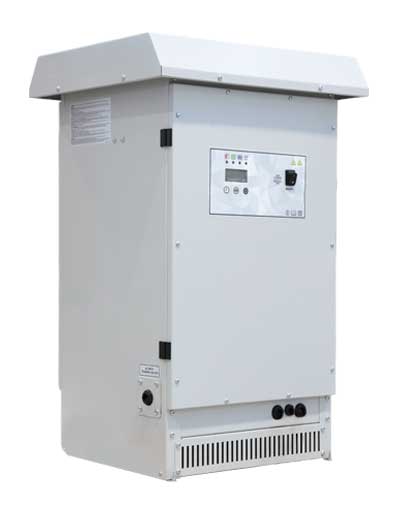
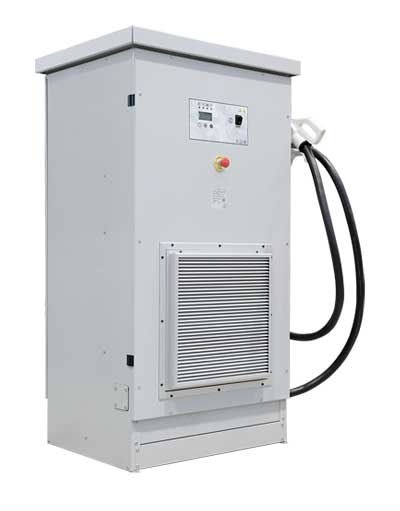
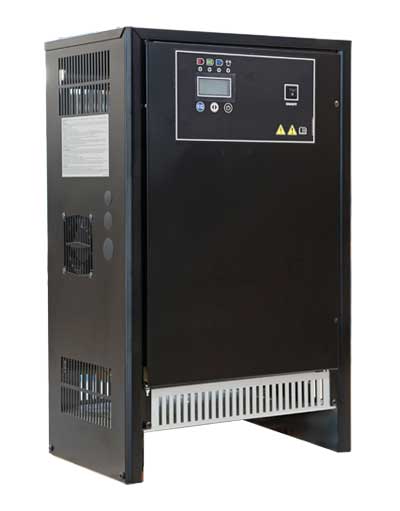
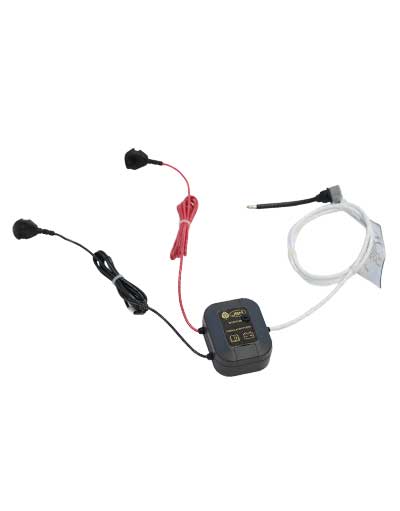
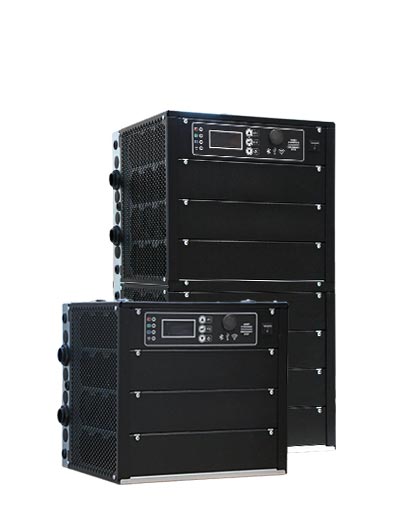
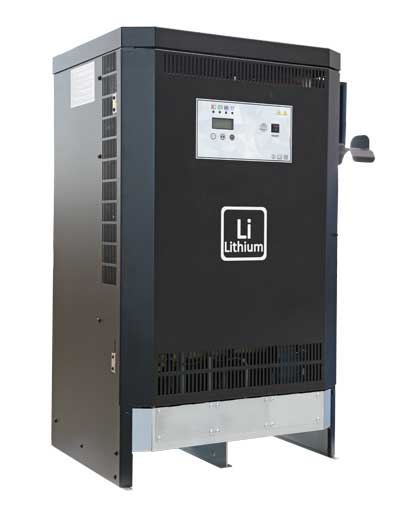
The following systems are engineered for Intralogistics and Light Material Handling:

Technical FAQ

How can one charging system support mixed warehouse fleets?
Many warehouses operate mixed fleets of electric pallet jacks, stackers, and tow tractors with different battery capacities. GEBAT industrial chargers with configurable parameters and wide voltage ranges allow diverse vehicle types to share the same charging station infrastructure.
Can the same infrastructure support both Lithium and Lead-Acid batteries?
Yes. GEBAT electric stacker charger solutions can support different chemistries when configured with the appropriate charging profiles, allowing logistics managers to transition to lithium at their own pace.
How do chargers handle fleets with different battery voltages?
Warehouse fleets often include 24V, 48V, or 80V systems. GEBAT chargers designed for traction batteries support wide voltage intervals and feature automatic battery recognition to apply the correct parameters instantly.
Is opportunity charging suitable for pallet jacks and stackers in multi-shift operations?
Absolutely. In multi-shift environments, a 24 volt pallet jack battery charger used for short bursts during breaks can extend runtime beyond the battery’s nominal capacity, eliminating the need for spare batteries.

For more information,
fill out the form.

    I declare I have read the privacy policy.

    * Required field