REQUEST INFORMATION

Industrial Battery Testing, Diagnostics,
and Reconditioning


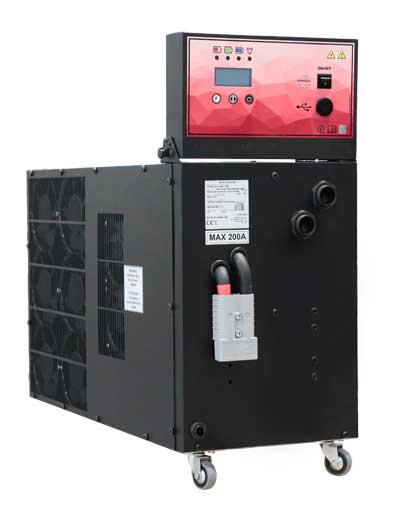
The efficiency of electric fleets depends largely on battery health. To maintain consistent performance over time, fleet managers and service centers rely on GEBAT’s advanced battery test equipment and regeneration systems.

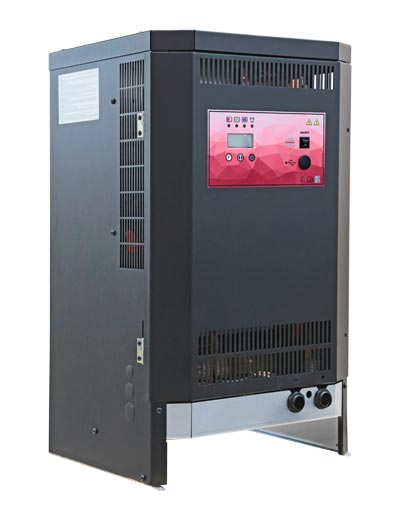
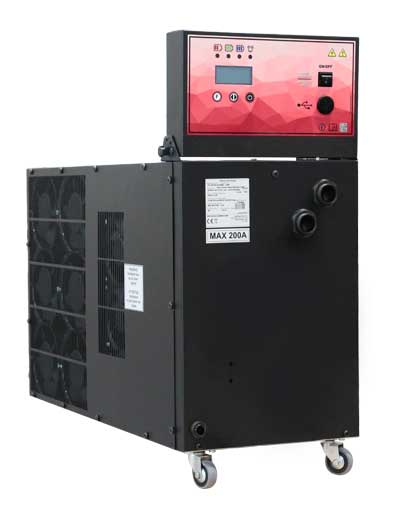
Using automatic battery dischargers and analyzers, it is possible to measure the actual capacity of every unit, accurately distinguishing between high-performing batteries and those requiring a recovery intervention.

Through dedicated battery recovery and desulfation systems, GEBAT enables treatments that restore lost capacity, extending service life and reducing environmental impact.

Our solutions are engineered for laboratories, workshops, and operators managing traction batteries for electric vehicles of all types and sizes.
Periodic capacity testing and diagnostics

In all electric traction applications, natural aging, incorrect charging, or poor maintenance inevitably reduce vehicle range.
Periodic testing with a professional battery analyzer allows you to understand the real state of your fleet and make data-driven decisions.

By performing a controlled current discharge, GEBAT instruments detect:

  • Delivered Capacity (Ah) and Energy (Wh): Essential data for determining the real State of Health (SoH).
  • Voltage Stability: Critical support for identifying defective cells that require replacement.
  • Recovery Margins: Evaluation of restorable capacity through battery rejuvenation cycles, with subsequent verification of results.

GEBAT battery test systems manage these processes fully automatically, eliminating the need for constant technician supervision.

Battery reconditioning and regeneration procedures

GEBAT systems apply automated treatments for battery reconditioning and energy efficiency restoration. The approach varies based on battery chemistry:

Desulfation and Recovery
(Lead-Acid Batteries)

In lead-acid batteries, degradation is often caused by sulfate crystals insulating the plates.

GEBAT battery regeneration equipment utilizes conditioning charge profiles.

This desulfation battery charger process restores lost capacity, boosts performance, and significantly extends operational life.

Balancing and Recalibration
(Lithium-Ion Batteries)

For LFP (LiFePO4), LTO, and NMC chemistries, the recovery process focuses on electronics optimization and cell balancing rather than desulfation:

  • BMS Recalibration: Allows the management system to correct algorithms for range estimation, State of Charge (SoC %), and State of Health (SoH %).
  • Cell Balancing: Aligns voltages between unbalanced cells (energy drift), preventing a single “weak” cell from limiting the entire pack’s performance.
  • Electronic Diagnostics: Verifies whether performance drops are due to BMS logic errors or actual physical module degradation using specialized lithium battery test equipment.

Compatible industrial battery types

GEBAT battery testing systems are universal and designed to treat:

  • Lead-Acid Batteries: Flooded (VLA), Gel (VRLA), AGM, and advanced technologies like Thin Plate Pure Lead (TPPL) and Lead-Carbon.
  • Lithium Batteries: LFP, LTO, NMC, and emerging Sodium-Ion (Na-Ion) technologies.
  • New Technologies: Solid-State storage systems and supercapacitors.

GEBAT battery test and reconditioning equipment

Technical FAQ

When should I replace a battery instead of reconditioning it?

Perform a capacity test with a battery discharger machine. If the value drops below 70-80% of the nominal capacity, intervention is required. If the capacity does not significantly improve after battery reconditioning cycles, replacement is the most reliable path.

How often should battery testing be performed?

For heavy-duty fleets (multi-shift or opportunity charging), best practice suggests a test every 6-12 months. Periodic monitoring with an industrial battery tester prevents sudden downtime and allows for timely maintenance.

What is the most reliable method to measure actual capacity?
A constant current discharge test under nominal conditions. The GEBAT battery discharger unit applies a controlled load until the established cutoff voltage is reached, measuring the actual Ah delivered and generating a detailed report.
Can a desulfation charger recover lead-acid batteries?

Yes. In many cases, a desulfation battery charger restores the chemical reactivity of degraded plates. By using GEBAT’s specific charging profiles, sulfate crystals can be dissolved, and the actual recovery can be verified through a post-treatment test.

Is it possible to recondition lithium-ion batteries?

While they do not require desulfation, they can be recovered through cell balancing and BMS recalibration. This is achieved using a battery pack cycler to perform controlled deep charge/discharge cycles that align internal voltages and correct SoC/SoH estimation errors.

What tools are needed for a professional battery service lab?

A center of excellence requires programmable chargers, automatic battery dischargers, and battery cycler equipment. This instrumentation standardizes diagnostics, making tests repeatable and comparable for scientific fleet management.

For more information,
fill out the form.

    I declare I have read the privacy policy.

    * Required field