REQUEST INFORMATION

AGV charger
and AMR battery
charging systems

In modern Smart Factories, the operational continuity of Automated Guided Vehicles (AGV) and Autonomous Mobile Robots (AMR) depends directly on the energy infrastructure.

An industrial AGV battery charger is not merely a power supply; it is a critical node that ensures stability, rapid charging, and seamless integration with fleet control systems. In high-intensity intralogistics environments, every AGV charging station must provide continuous service to multiple, often diverse, vehicles and robots, adapting to extremely fast and variable duty cycles.

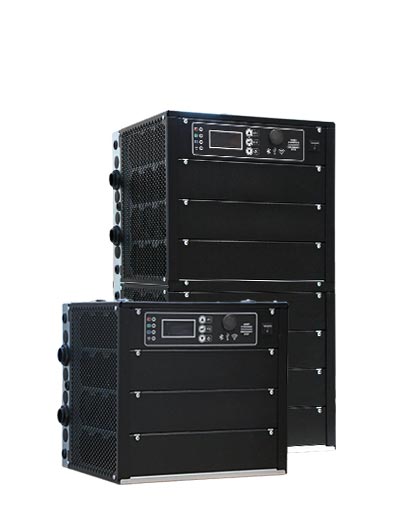
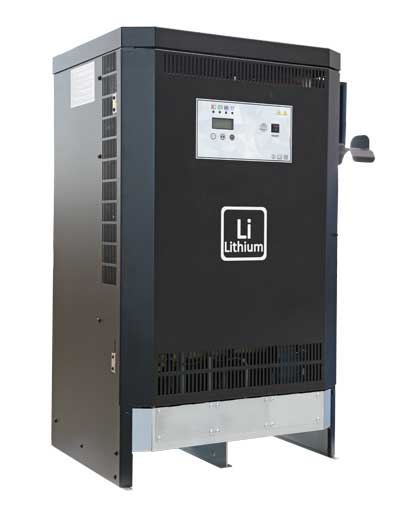
This application represents a sector where high-speed and ultra-fast charging technologies express their full potential, pushing the boundaries of current technological capabilities. GEBAT designs and manufactures advanced AGV charging systems compatible with all types of Lithium and Lead-Acid batteries, as well as supercapacitor-based energy storage systems.

With a global reputation for excellence, GEBAT provides partners with the know-how and expertise gained in developing high-performance charging solutions for advanced intralogistics.
Charging Requirements for 24/7 AGV and AMR Fleets

AGV Opportunity Charging

The majority of AGV and AMR fleets utilize AGV opportunity charging rather than full discharge cycles. Vehicles recharge during brief operational pauses at AGV docking station points distributed throughout the facility.

Our systems ensure:

  • Stable DC output even during extremely frequent micro-cycles.
  • Accurate current control to minimize battery overheating.
  • Consistent and repeatable charging profiles to guarantee uniform performance across the entire fleet.

Ultra-Low Ripple and Battery Protection

Current ripple is a critical parameter: excessive values generate thermal stress in Lithium packs and reduce efficiency, especially in 24/7 fleets.

GEBAT guarantees extremely clean DC output, protecting cell chemistry and the stability of supercapacitor energy storage systems.

Additionally, GEBAT charging systems feature:

  • Controlled and stable DC output.
  • Smooth voltage and current transitions.
  • Advanced protections against overcurrent and overheating.
  • Reliable performance under continuous and highly variable loads.

CANBUS Integration and BMS Communication

Active communication between the AGV charger and the BMS (Battery Management System) is essential for dynamic adjustment of charging profiles based on temperature and cell status.

We natively support CANBUS protocols, with flexibility to implement other communication standards. All GEBAT systems guarantee safe operating modes even in the event of communication interruption.

Charging Architectures for Industrial Robotics

High-density warehouses require scalable AGV charging station solutions capable of managing multiple robots simultaneously.

A typical GEBAT infrastructure features:

  • Centralized charging stations: featuring scalable modular architecture.
  • Distributed charging points: integrated along the workflow to eliminate “dead time” dedicated to charging.
  • Smart energy management: dynamic power flow control and load balancing, essential for facilities with grid constraints or renewable energy integration.

Supercapacitor Charger and Hybrid Solutions

In ultra-high duty cycle robotic applications, supercapacitors (or ultracapacitors) are the preferred choice for ultra-fast charging (seconds) and millions of duty cycles.

A supercapacitor energy storage system is ideal for:

  • Ultra-high frequency opportunity charging.
  • Short, repetitive high-power cycles.
  • Peak power buffering.

Compared to lithium batteries, supercapacitors offer higher power density and longer cycle life but require extremely precise current control with millisecond start-up times.

GEBAT also supports hybrid (battery-supercapacitor) systems, where the battery provides continuous energy and the supercapacitor handles impulsive power peaks.
Our supercapacitor battery chargers offer specific profiles and software features that ensure maximum robustness.

Technical Specifications

GEBAT industrial charging systems for robotics typically feature:

  • Nominal voltages: 24 V, 48 V, 80 V (special applications up to 800 V).
  • Single-phase or three-phase power supply based on requirements.
  • Protection ratings: IP21 for standard warehouses or IP54 for harsh/outdoor environments.

GEBAT Solutions for AGVs and Robotics

Technical FAQ – AGVs, AMRs, and Supercapacitors

What is the difference between opportunity charging and battery swapping?
AGV opportunity charging integrates short, frequent sessions during breaks, reducing the need for spare batteries. Swapping minimizes vehicle downtime but requires dedicated infrastructure and extra battery packs.
How does ripple affect lithium batteries and supercapacitors?
Excessive ripple increases thermal stress, which can shorten the lifespan of cells. A stable, well-filtered DC output from a professional AGV battery charger is essential.
Can one station charge multiple AGVs or AMRs simultaneously?
Yes. GEBAT modular multi-port stations allow simultaneous charging with integrated load balancing and energy management.
Do GEBAT systems support all types of supercapacitors?
Yes, our platforms can be configured for any supercapacitor battery charger requirement, supporting various sizes, capacities, and hybrid configurations.
Why is CANBUS integration important?
CANBUS enables real-time coordination between the AGV charger and the BMS, improving safety, charging precision, and long-term reliability.

For more information,
fill out the form.

    I declare I have read the privacy policy.

    * Required field