REQUEST INFORMATION

Battery chargers for Electric Mining Equipment and Haul Trucks

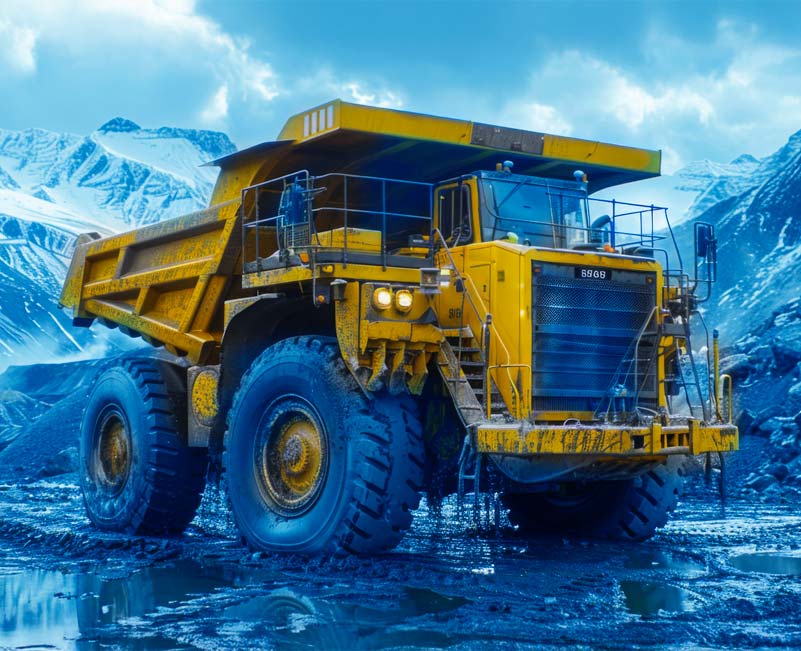
GEBAT designs and manufactures charging stations and infrastructures specifically engineered for electric mining vehicles and heavy-duty machinery.

Our charging solutions are deployed to power diverse fleets, including:

  • Electric mining trucks and haulers.
  • Electric mining dump trucks.
  • Electric mining shovels and large-scale excavators.
  • Underground mining electric vehicles.
  • Battery-powered drill rigs and bolters.

In these environments, operating under extreme conditions and continuous duty cycles, the charging infrastructure is not merely an auxiliary system but a mission-critical component of the mine’s electrical grid.

Charging requirements in electrified mining operations

Electric mining equipment operates with high torque demands, ultra-long duty cycles, and severe environmental stress.

Electric mining haul trucks, dumpers, and other heavy-duty machinery utilize massive battery packs with an exceptionally wide range of nominal voltages.

To ensure operational continuity, GEBAT charging systems guarantee:

  • Extreme Ruggedness.
    Resistance to impact and vibrations.
  • Precision Current Regulation.
    To protect high-value battery assets.
  • Predictable Performance.
    Consistent output during extended multi-shift operations.

Operational constraints in mining environments

Mining charging infrastructures must perform reliably despite:

  • Continuous operation of heavy-duty mining equipment.
  • High levels of dust, vibration, and extreme temperature swings.
  • Remote locations with limited or unstable electrical grids.
  • Ultra-high power requirements per individual vehicle.
  • Scalability: Modular designs to support the progressive electrification of the mining fleet.

Modern sites often require a single grid to support both surface electric mining haulage and underground mining electric vehicles.

Electrical criticalities in mining machinery charging

The large-scale battery systems used in an electric mining truck require highly stable power conversion.

GEBAT chargers ensure controlled electrical parameters, including:

  • Stable DC output under variable loads and AC grid fluctuations.
  • DC current ripple maintained below 8%.
  • Power factor exceeding 0.99.
  • THDi (Total Harmonic Distortion) below 15%.

These specs are vital when multiple high-power units operate simultaneously within the same infrastructure.

BMS integration and CANBUS communication

Advanced battery electric mining equipment relies on sophisticated Battery Management Systems (BMS).
GEBAT systems feature:

  • Configurable CANBUS interfaces for seamless OEM integration.
  • Adjustable data transfer speeds.
  • Automatic battery recognition for safe, “plug-and-play” operation.
  • Integrated dataloggers for operational health monitoring.

Multi-vehicle infrastructures

Mines often operate fleets composed of many different electric vehicles.

Charging infrastructures must therefore enable coordinated energy management across multiple machines.

GEBAT chargers support:

  • Programmable charging profiles and priorities.
  • Limitation of absorbed power.
  • Peak-shaving and energy profiling strategies.
  • Automatic compensation for voltage drop on DC cables.

This ensures operational continuity even when the available grid power is limited.

Typical battery platforms in electric mining

Mining machinery spans a vast spectrum of power requirements, from compact underground utility vehicles to massive electric mining shovels.

Underground Service
& Utility Vehicles

Typical Voltage:
24 – 144 VDC

Applications:

  • Personnel carriers.
  • Maintenance vehicles.
  • Auxiliary equipment.

Underground Production
Machinery

Typical Voltage:
100 – 400 VDC

Applications:

  • Electric LHD (Load-Haul-Dump) loaders.
  • Underground trucks.
  • Electric drill rigs.

Surface Mining
Machinery

Typical Voltage:
400 – 800 VDC

Applications:

  • Electric mining dump trucks.
  • Haul trucks.
  • Large-scale electric mining excavators.

Mining charging technologies

Electric mining fleets generally utilize large Lithium-ion battery packs requiring high-efficiency power conversion.

GEBAT utilizes High-Frequency (HF) and IGBT hybrid technologies designed for harsh industrial environments, supporting the high-voltage demands of electric mining trucks up to 800 V DC.

Charging architectures for surface and underground mines

The infrastructure layout is dictated by the mine’s operational logistics:

  • Open-pit (surface) mines.
    Typically utilize centralized high-power charging hubs for electric haul trucks and dumpers.
  • Underground mines.
    Often deploy distributed charging points along operational routes to minimize vehicle transit time and maximize face-time.
  • Modular infrastructure.
    Allows for a “pay-as-you-grow” approach, expanding charging capacity as the fleet electrification progresses.

GEBAT solutions for the mining sector

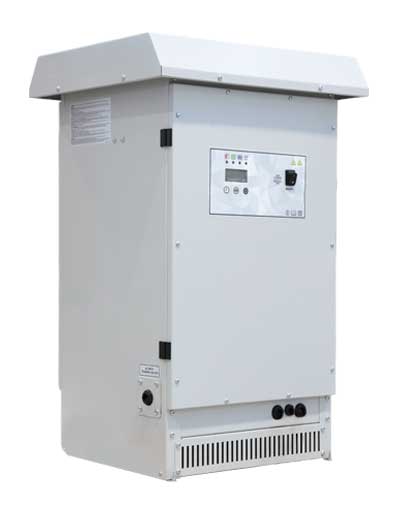
HPS GSE

HPS GSE

Charger for Harsh Environment

A high-performance
DC charging system
for harsh environments.
Ideal for utility fleets
up to 144V DC and 36 kW.

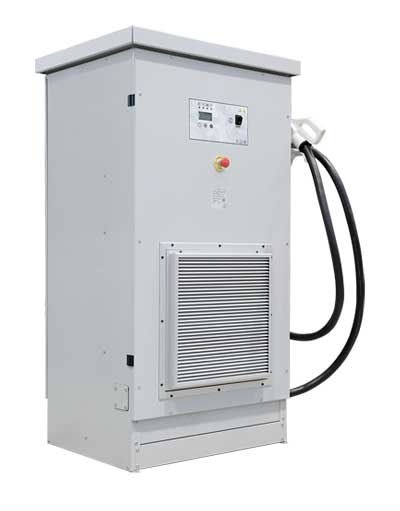
HVS

HVS

High Voltage Charging Station

Engineered for the massive battery packs of heavy-duty electric mining vehicles. Supports up to 800V DC and 120 kW per unit, with modular stacking capabilities for higher power needs.

Technical FAQ

How do you plan charging infrastructure for multi-shift mining fleets?
Planning depends on vehicle duty cycles and site logistics. Charging windows are typically integrated into the operational flow to maintain availability without creating massive peak loads on the mine’s grid.
Can large haul trucks share infrastructure with smaller utility vehicles?
Yes, provided the infrastructure supports a wide range of DC voltages. GEBAT systems are designed to be flexible, though large electric mining trucks typically require dedicated high-power ports.
Why is DC ripple critical for large-capacity mining batteries?
High ripple increases internal cell heating, accelerating degradation. In heavy-duty mining equipment, stable DC current is essential to maximize battery ROI and fleet reliability.
What are the main challenges in underground mining EV charging?
Underground mining electric vehicles face limited space, restricted ventilation, and harsh ambient conditions. Chargers must be compact, highly efficient (to reduce heat rejection), and feature robust electronic protection.
Where are mining charging stations typically installed?
In surface mines, they are located near dispatch, maintenance, or parking areas. In underground operations, distributed stations along haulage routes are preferred to reduce downtime.

For more information,
fill out the form.

    I declare I have read the privacy policy.

    * Required field