REQUEST INFORMATION

Charging Infrastructure for Electric Buses and Heavy-Duty Logistics

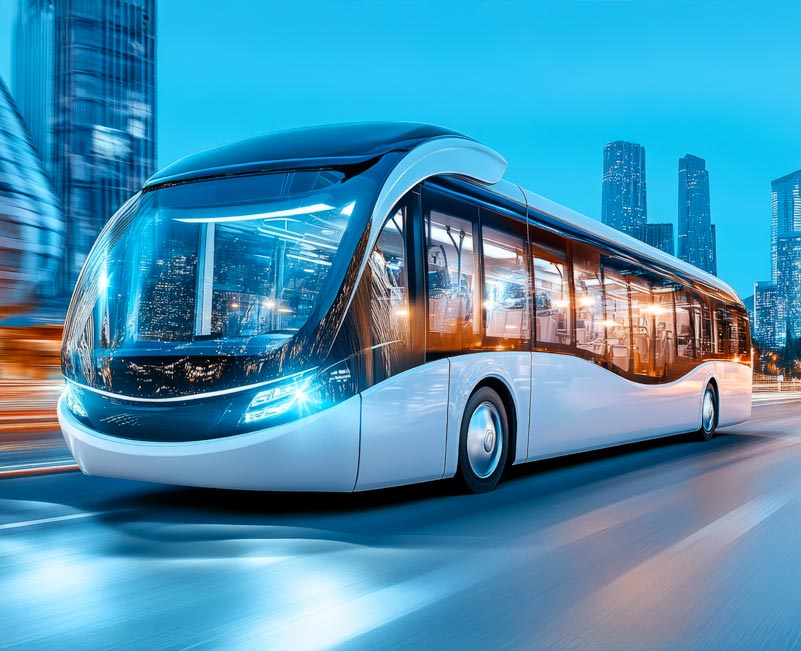
Electric buses have become a cornerstone of modern public transport systems.
Transit agencies and fleet operators are progressively replacing diesel fleets with battery electric buses (BEV) to reduce emissions, noise, and total cost of ownership.

Alongside these, other electrified vehicles are emerging, such as electric trucks for logistics, refuse collection vehicles, and urban service trucks.

Electric buses generally operate on fixed routes with predictable schedules. Fleets may include standard city buses, articulated buses, electric shuttles, and other public transit vehicles.

A robust electric bus charging station infrastructure is the key element to ensuring vehicle uptime, battery longevity, and energy efficiency.

GEBAT designs and manufactures charging systems for electric vehicles and heavy-duty fleets with high-capacity batteries, based on standard automotive interfaces.

We support the CCS (Combined Charging System) standard, available as CCS1 for North America and CCS2 for Europe, as well as NACS (Tesla), MCS (Megawatt Charging System), and GB/T.

Furthermore, GEBAT produces ultra-fast charging equipment for integration into OppCharge pantograph systems, including Top-Down (Inverted Pantograph) or Bottom-Up configurations. The primary communication protocol used for these applications is ISO 15118 (Plug & Charge), though GEBAT also implements CANBUS-based protocols and proprietary solutions to meet specific OEM requirements.

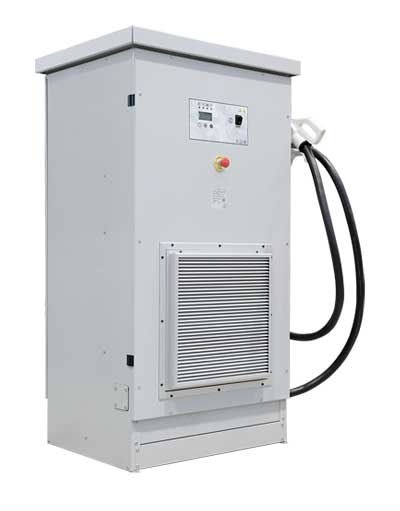
The standard GEBAT HVS series, covered by CE certification for Europe and UL/CSA for the USA/Canada, supports battery voltages up to 800 VDC and 120 kW.

Through modular configurations of multiple HVS units and the use of liquid-cooled cables, charging power can be scaled to meet MCS (Megawatt Charging System) limits, specifically:

  • Theoretical Maximum Power: 3.75 MW (3750 kW)
  • Maximum Voltage: 1250 V
  • Maximum Current: 3000 A

Charging requirements for electric bus fleets

Electric bus fleets operate on precise service schedules. Vehicles must maintain high availability throughout the day, completing multiple service and charging cycles.

Electric bus batteries are significantly larger than those used in standard passenger or light industrial vehicles. Urban buses utilize massive battery packs designed for intensive duty cycles.

The infrastructure must provide stable DC power and support Smart Charging systems for the energy management of large-scale fleets.

Operational constraints

Transit depots and EV bus charging station infrastructures must manage several constraints:

  • Continuous vehicle operation during daily service.
  • Limited charging windows between shifts.
  • Outdoor installations exposed to variable environmental conditions.
  • High energy demand from large fleets.
  • Limited depot space for charging hardware.
  • Scalability for future fleet expansion.

Electrical performance and stability

High-power charging for electric buses requires stable DC supply conditions.

Poor power quality, high ripple, or unstable charging current can increase battery temperature and reduce lifecycle.

The infrastructure must guarantee stable and controlled power conversion. In large depots, managing energy distribution across multiple vehicles simultaneously is critical.

BMS and CANBUS integration

Battery Management Systems (BMS) play a central role in bus charger operations.
Modern systems communicate with the vehicle BMS via standard automotive protocols or CANBUS.

The charger receives real-time data such as State of Charge (SoC), temperature, and charging limits.

This communication allows for the dynamic adaptation of current and voltage, enhancing safety and protecting the battery.

GEBAT chargers safely manage potential instabilities or communication interruptions, ensuring stable and controlled operation.

Multi-vehicle charging infrastructure

In bus depots, multiple vehicles are charged at the same time.

The infrastructure must support electric bus charging stations strategies such as:

  • Charging cycle scheduling.
  • Power distribution across multiple chargers.
  • Peak shaving to reduce grid absorption spikes.
  • Load balancing between vehicles.

Typical battery platforms in electric buses

GROUP 1


Compact
transport vehicles

Electric shuttles and compact buses use mid-sized batteries designed for short urban routes or feeder services.

Battery voltages generally fall within the high-voltage platforms typical of commercial EVs.

GROUP 2


Standard city
buses

The 12-meter urban bus is the most common configuration in public transit.

These utilize high-capacity lithium batteries designed for full-day service cycles, requiring reliable bus chargers.

GROUP 3


Heavy-duty
electric buses

Articulated buses or long-range coaches utilize the largest battery systems in the sector.

These require high-power bus charging station infrastructures to manage massive energy storage and intensive duty cycles.

Electric bus charging technologies

Transit fleets primarily utilize DC fast charging systems. Two main approaches are common:

Depot Charging

Vehicles are charged at the depot during downtime, typically overnight between shifts.

Opportunity Charging (OppCharge)

Some networks utilize rapid charging during operational breaks, such as at route termini, often via a pantograph bus charger.

Charging architectures for electric bus fleets

Centralized Depot Charging

Multiple charging stations are installed within the depot. This simplifies maintenance and electrical grid management.

Distributed Infrastructure

Charging systems are installed at various points in the network, such as termini or satellite depots. This allows for smaller battery sizes and mid-service charging.

In-service Charging

Charging during short stops allows vehicles to recover energy throughout the day, ideal for high-frequency lines.

GEBAT products
for electric bus
applications

HVS

HVS

High Voltage DC
Fast Charging Station

A high-power platform designed for large-capacity battery systems, supporting up to 800VDC and modular scalability for bus charging station setups.

Technical FAQ

How many chargers are needed in a bus depot?
The number of bus chargers depends on fleet size, charging strategy, and available downtime. Many depots operate with a charger-to-vehicle ratio of less than 1:1 if charging is managed overnight.
What electrical power is required for an electric bus depot?
The required power depends on the number of buses and battery capacities. Large depots may require several megawatts of power for simultaneous electric bus charging.
How long does it take to charge an electric bus?
Charging time depends on battery capacity and charger output. Overnight depot charging takes several hours, while pantograph bus charger systems can provide significant energy boosts in minutes.
Why is communication between the charger and the bus important?
Communication with the BMS allows for continuous monitoring of battery parameters, keeping current and voltage within safe limits and optimizing the charging process for longevity.
What charging strategies do electric bus fleets use?
Fleets generally combine overnight depot charging with opportunity charging during operational breaks to ensure sufficient range throughout the service day.

For more information,
fill out the form.

    I declare I have read the privacy policy.

    * Required field